
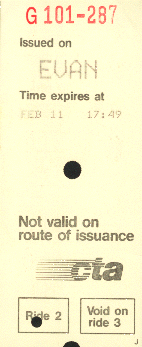
The CTA transfer with the clock and map was finally replaced in 1986. Too much fraud was taking place, with people passing transfers to others. So the CTA adopted new transfer regulations. Although these new rules were more restrictive, the basic rules were nevertheless simple. Transfers would be valid for a second and a third ride, within a two hour period, and not valid on route of issue.
On the transfer, the clock was replaced with squares for the hours and minutes (increments of 20 minutes). Instead of punching the time of issue, the time of expiration would be punched. The city map on a transfer was replaced with squares for each route. Rail transfers had squares with letter abbreviations for each route segment, while bus transfers had a square for each route number operating out of a given bus garage. The CTA had separate transfer forms for each garage, the bus transfer shown was for North Park Garage. At the bottom of a transfer was a "Ride 2" square which would be punched for the second ride. The transfer would be collected on the third ride. Pace adopted the same new rules at the same time, and started using a similar transfer. Except the Pace transfer had three columns of digits 0 through 9, where the route number would be indicated. Unlike the old suburban bus transfers, the new Pace transfers would not be exchanged for CTA transfers.
Also during the 1980's, the CTA offered the "Super Transfer", enabling unlimited rides during Sundays.
Also shown is a transfer issued by a turnstile at a rapid transit station.
2. A transfer is valid only on the date specified or as otherwise specified by the "ND" (next day) indication.
3. A transfer is valid for two hours from the time of issuance. The time the transfer expires is indicated on the reverse side.
4. A transfer is not valid on the bus or rail route of issue except for senior/disabled passengers displaying a valid RTA Reduced Fare Card.
Weekdays - Off-peak Hours
Saturday, Sunday, Holiday - All Day
5. A transfer can be only used twice and will be invalidated by the fare-collecting employee on Ride 3.
6. A transfer may be used only by the person to whom it was issued by CTA.
7. Anyone using a transfer in violation of these regulations is subject to a fine of $200.00 for each offense.